
Can Bariatric Surgery Reverse Fatty Liver? Answers for Surat Patients
Dr. Vikram Lotwala
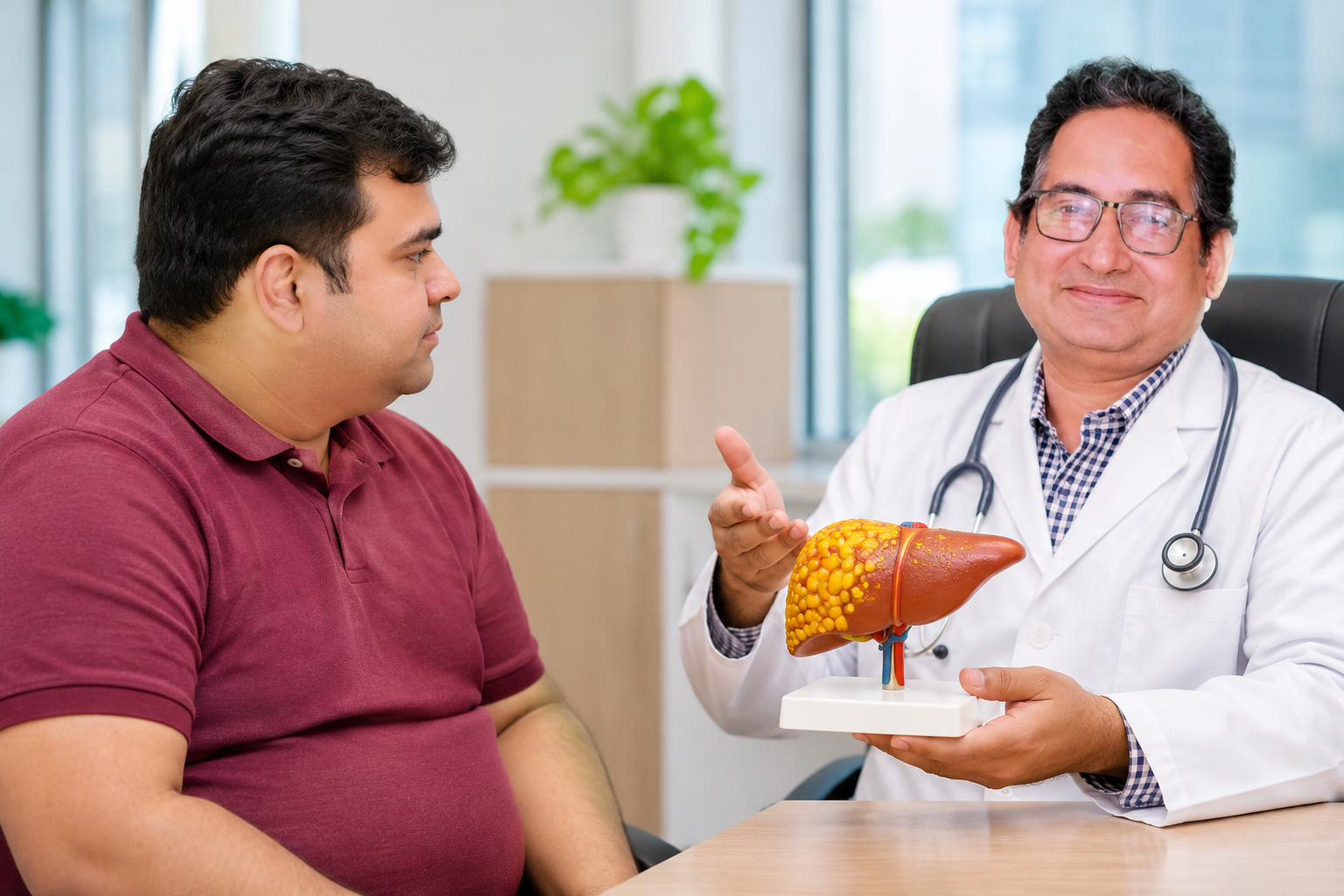
Yes, bariatric surgery can significantly reduce liver fat and improve fatty liver disease in many patients with obesity. Weight loss may also improve liver inflammation and, in some cases, fibrosis. However, complete reversal is not guaranteed. Liver blood tests, imaging and fibrosis assessment help doctors evaluate liver health before and after treatment.
If you are wondering can bariatric surgery reverse fatty liver in surat, the answer depends on the severity of liver disease, metabolic health, weight loss and long-term lifestyle changes.
Fatty liver disease is common among people with obesity, insulin resistance and type 2 diabetes. Although early disease may improve substantially with weight reduction, advanced liver scarring requires specialist evaluation.
Dr. Vikram Lotwala, associated with Wings Hospital, Adajan, can assess whether bariatric surgery is appropriate for patients with obesity and related health conditions.
How Obesity Causes Fatty Liver
Fatty liver develops when excess fat accumulates inside liver cells.
The condition previously called non-alcoholic fatty liver disease (NAFLD) is now commonly classified as metabolic dysfunction-associated steatotic liver disease (MASLD) when specific metabolic criteria are met.
Obesity and insulin resistance are important contributors.
When the body becomes less responsive to insulin, more fatty acids may reach the liver. The liver can also produce additional fat, increasing fat accumulation.
Over time, some patients develop inflammation and liver-cell injury.
Stages of Fatty Liver Disease
Fatty liver disease can involve several levels of severity:
-
Simple steatosis: Excess fat accumulates in the liver.
-
Steatohepatitis: Fat accumulation occurs alongside inflammation and liver-cell injury.
-
Fibrosis: Repeated injury leads to scar tissue.
-
Cirrhosis: Advanced scarring changes liver structure and function.
Not every patient progresses through these stages.
However, people with obesity, type 2 diabetes and other metabolic conditions may have a greater risk of progressive liver disease.
Importantly, fatty liver can exist even when patients have no noticeable symptoms.
What Happens to the Liver After Surgery
One reason patients consider fatty liver weight loss surgery is the potential improvement in metabolic health.
Bariatric surgery can produce substantial weight loss by changing stomach capacity, digestive processes and hormones involved in appetite and metabolism.
As body weight decreases, liver fat may also decline.
1. Reduction in Liver Fat
Weight loss often reduces fat accumulation within liver cells.
This may improve liver imaging findings and metabolic measurements.
However, the amount of improvement varies.
2. Improvement in Liver Inflammation
Some patients with metabolic steatohepatitis experience reduced liver inflammation following sustained weight loss.
This is important because ongoing inflammation can contribute to liver injury and fibrosis.
3. Changes in Liver Fibrosis
Fibrosis may improve in selected patients after substantial, sustained weight reduction.
However, improvement is not guaranteed, particularly in advanced disease.
Patients with cirrhosis require careful specialist assessment because bariatric surgery may carry additional risks.
Can Sleeve Gastrectomy Improve Fatty Liver?
Yes. Sleeve gastrectomy can improve liver fat and metabolic health in eligible patients.
Gastric bypass may also provide benefits.
The most appropriate procedure depends on BMI, diabetes, reflux, nutritional status and liver disease severity.
For an overview of treatment options, read about bariatric surgery.
Pre-Surgery Liquid Diet and Liver Size
Some bariatric surgery programmes recommend a supervised preoperative low-calorie or liquid diet.
This preparation may reduce liver volume and make certain surgical steps easier.
However, not every patient requires the same diet.
Why Does Liver Size Matter?
The liver lies close to the stomach.
During laparoscopic bariatric surgery, the surgeon needs sufficient visibility and access to operate safely.
A large, fatty liver may make exposure more difficult.
A prescribed preoperative diet can sometimes reduce liver size before surgery.
What Does the Diet Include?
Depending on the patient's medical condition, a supervised plan may include:
-
Measured portions of prescribed meal replacements.
-
Protein-rich liquids.
-
Suitable low-calorie foods.
-
Adequate hydration.
-
Adjustments to diabetes medicines when necessary.
Patients should not begin an extreme liquid diet independently, especially when taking insulin or other glucose-lowering medicines.
Rapid dietary changes can increase the risk of hypoglycaemia and nutritional problems.
Tests to Track Liver Health
Doctors use blood tests, imaging and fibrosis assessments to evaluate liver health.
A normal liver enzyme result does not always exclude significant fatty liver disease or fibrosis.
Therefore, testing should be based on individual risk factors.
Liver Health Checklist Before and After Surgery
| Stage | Test or Assessment | Purpose |
|---|---|---|
| Before surgery | Liver function blood tests | Assess liver enzymes and related measurements |
| Before surgery | Liver ultrasound | Identify steatosis and structural abnormalities |
| Before surgery | Fibrosis assessment | Estimate the possibility of liver scarring |
| Before surgery | Diabetes and lipid tests | Assess metabolic risk factors |
| After surgery | Follow-up liver blood tests | Monitor liver health |
| After surgery | Repeat imaging if indicated | Assess changes in steatosis or other findings |
| Long-term | Weight and metabolic monitoring | Support sustained improvement |
The medical team may also use non-invasive fibrosis scores or liver elastography when appropriate.
Are Liver Blood Tests Enough?
No.
Liver enzymes can be normal even when clinically important fibrosis is present.
For this reason, patients with elevated metabolic risk may require additional assessment.
How Often Should Tests Be Repeated?
Follow-up depends on baseline findings, liver disease severity and the patient's response to treatment.
Patients should follow the monitoring schedule provided by their treating team rather than relying on a fixed timeline.
When Fatty Liver Needs a Specialist
Not every patient with fatty liver requires bariatric surgery.
Many people benefit from structured weight management, physical activity and treatment of associated metabolic conditions.
However, specialist assessment becomes particularly important when there is evidence of advanced liver disease.
When Should You Seek Further Evaluation?
A liver specialist may be needed when:
-
Blood tests suggest significant liver dysfunction.
-
Fibrosis assessments indicate possible advanced scarring.
-
Imaging suggests cirrhosis.
-
Platelet counts are unexpectedly low.
-
The patient has unexplained jaundice.
-
There is abdominal fluid accumulation.
-
Other liver conditions may be present.
Patients with known cirrhosis need individualised assessment before considering surgery.
Some patients may not be suitable candidates for particular bariatric procedures.
Can Fatty Liver Return?
Yes.
Fatty liver can recur or worsen when weight is regained or metabolic risk factors remain uncontrolled.
Long-term management therefore includes sustainable nutrition, physical activity and appropriate treatment of diabetes and other conditions.
Patients can also watch the educational video about health conditions that improve after bariatric surgery.
For information about other liver conditions, the website also provides a page on liver disease treatment. These conditions require different assessments and should not be confused with fatty liver disease.
Fatty Liver and Obesity Treatment in Citylight Surat
Patients researching fatty liver and obesity treatment in citylight surat should first establish how advanced their liver disease is and whether obesity-related health problems make bariatric surgery appropriate.
A consultation may include a review of:
-
Current weight and BMI.
-
Diabetes and insulin resistance.
-
Liver blood tests and imaging.
-
Possible liver fibrosis.
-
Previous weight-management attempts.
-
Current medicines.
-
Nutritional status.
-
Overall surgical fitness.
Dr. Vikram Lotwala, associated with Wings Hospital, Adajan, can discuss bariatric treatment options after an individual medical assessment.
Patients with suspected advanced fibrosis or cirrhosis may also need evaluation by a hepatologist.
Can Fatty Liver Improve Without Surgery?
Yes.
Many patients improve liver fat through sustained weight reduction without undergoing an operation.
Treatment may include nutritional counselling, physical activity, management of diabetes and other metabolic conditions, and appropriate medication.
The decision to consider bariatric surgery depends on obesity severity, related medical conditions, treatment history and surgical suitability.
Importantly, surgery should not be presented as the only treatment for fatty liver.
For patients with obesity who qualify for bariatric surgery, liver improvement may be an additional benefit of treatment.
Conclusion
For patients asking can bariatric surgery reverse fatty liver in surat, research indicates that significant weight loss after bariatric surgery can reduce liver fat and improve inflammation in many patients.
Some individuals may also experience improvement in fibrosis, although advanced scarring may not fully reverse.
The outcome depends on liver disease severity, metabolic health, sustained weight loss and ongoing medical care.
Dr. Vikram Lotwala, associated with Wings Hospital, Adajan, can discuss whether bariatric surgery is appropriate after reviewing the patient's health profile.
Frequently Asked Questions
How soon does liver fat reduce?
Liver fat may begin decreasing during the early period of sustained weight loss, but the speed varies between patients. Improvement in inflammation or fibrosis may take longer. Follow-up blood tests, imaging, and fibrosis assessments help evaluate progress. A specific recovery timeline cannot be guaranteed.
Is fatty liver a risk during surgery?
Fatty liver can make some bariatric operations technically more challenging, particularly when the liver is enlarged. Advanced fibrosis or cirrhosis may increase surgical risk. The medical team assesses liver health before surgery and may recommend dietary preparation, further testing, or specialist evaluation when necessary.
Do I need a liver biopsy?
Not every patient with fatty liver requires a liver biopsy. Doctors often begin with blood tests, imaging, and non-invasive fibrosis assessment. A biopsy may be considered when the diagnosis is uncertain or results could change treatment. The decision depends on individual findings and specialist recommendations.
Can fatty liver come back?
Yes, fatty liver can return after bariatric surgery, particularly with weight regain or persistent metabolic problems. Patients seeking fatty liver and obesity treatment in citylight surat should understand that long-term nutrition, physical activity and medical follow-up remain important even when liver tests improve.
Consult Dr. Vikram Lotwala
Advanced bariatric, hernia and laparoscopic surgical care in Surat.