
Gallstone Symptoms: When Do Gallstones Need Surgery? (Surat Guide)
Dr. Vikram Lotwala
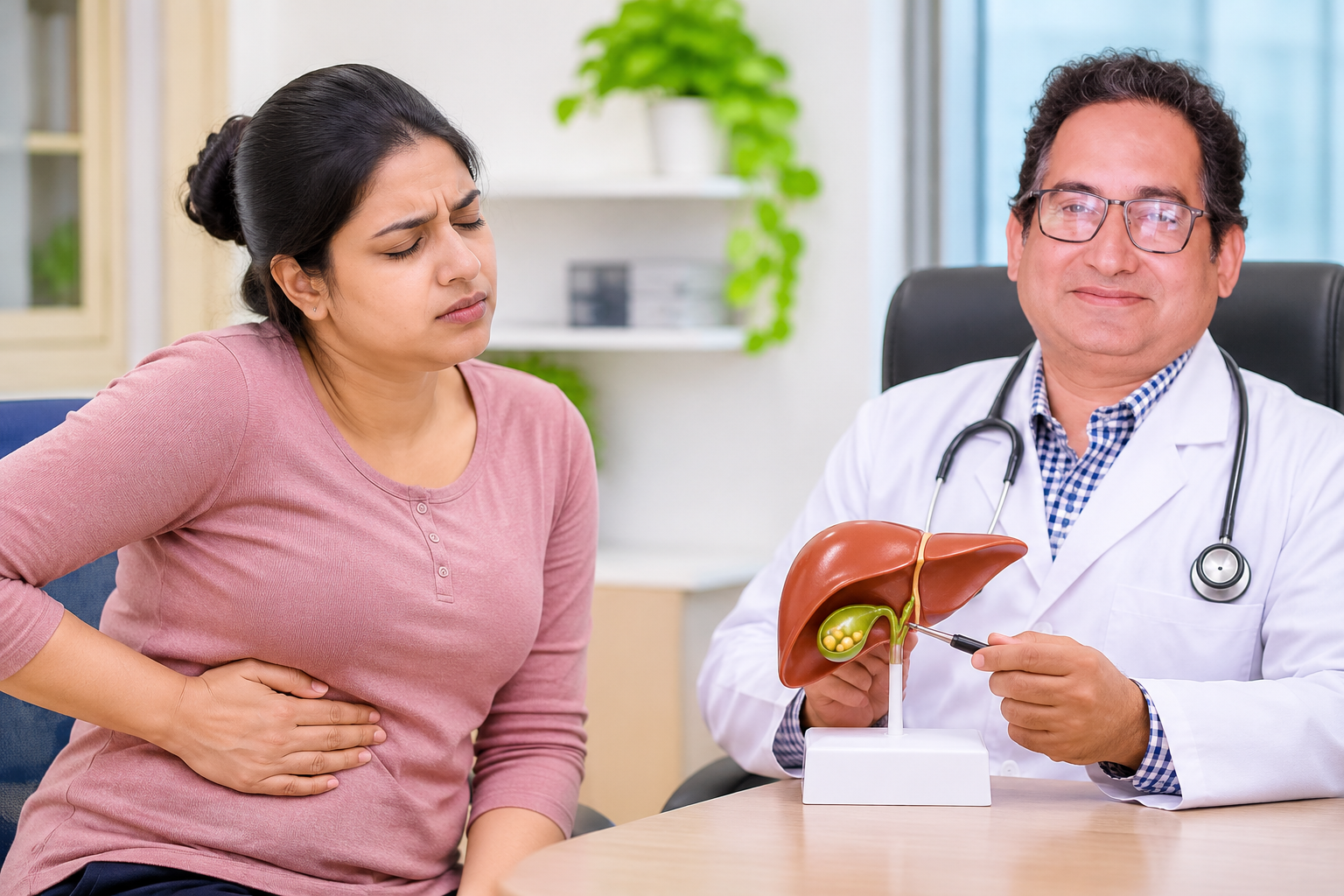
Gallstones may need surgery when they cause repeated pain attacks, gallbladder inflammation, or complications such as jaundice and pancreatitis. Silent stones discovered during an ultrasound often require observation rather than an operation. Typical gallstone pain occurs in the upper-right abdomen and may spread towards the back or right shoulder.
If you are wondering when do gallstones need surgery in surat, the answer depends on symptoms, ultrasound findings and the risk of complications.
Some patients have gallstones for years without experiencing discomfort. Others develop sudden abdominal pain that requires urgent medical attention.
Dr. Vikram Lotwala, associated with Wings Hospital, Adajan, evaluates symptoms and investigations to determine whether observation or surgical treatment is appropriate.
Common Gallstone Symptoms
Gallstones are hardened deposits that develop inside the gallbladder, a small organ that stores bile produced by the liver.
Many gallstones remain silent. However, when a stone temporarily blocks the gallbladder outlet, it can cause biliary colic.
What Does Gallstone Pain Feel Like?
Typical symptoms include:
-
Pain in the upper-right abdomen.
-
Discomfort in the upper-middle abdomen.
-
Pain spreading to the back or right shoulder.
-
Nausea or vomiting.
-
Pain episodes occurring after meals.
-
Abdominal discomfort lasting from several minutes to hours.
Fatty meals may trigger symptoms in some patients, although attacks can occur at other times.
Understanding Gallbladder Pain Location
The usual gallbladder pain location is beneath the right rib cage.
However, patients may also experience pain in the centre of the upper abdomen.
Importantly, abdominal pain does not always mean gallstones are responsible. Acid reflux, stomach ulcers, liver conditions and other illnesses can produce similar symptoms.
Therefore, proper diagnosis is essential before deciding on surgery.
Silent Gallstones: Watch or Operate?
Silent gallstones are stones discovered during imaging without typical gallstone symptoms.
For most patients with uncomplicated asymptomatic gallstones, immediate surgery is not necessary.
When Is Observation Appropriate?
Doctors may recommend observation when:
-
Gallstones are discovered incidentally.
-
The patient has no typical biliary pain.
-
There is no gallbladder inflammation.
-
No bile duct obstruction is identified.
-
There are no complications requiring treatment.
This approach is commonly called silent gallstones treatment or watchful waiting.
However, selected high-risk situations may require a different recommendation.
When Is Surgery Usually Considered?
Surgery is commonly considered when gallstones cause repeated or troublesome biliary pain.
It may also be recommended for gallbladder inflammation or complications involving the bile ducts or pancreas.
The standard operation for symptomatic gallbladder stones is generally laparoscopic cholecystectomy, which removes the gallbladder.
Removing only the stones while leaving the gallbladder behind is not the usual definitive treatment.
For more information, read about gallbladder and CBD stones.
Patients can also explore gallbladder stone treatment without surgery to understand when non-surgical management may be appropriate.
Warning Signs That Need Urgent Care
Some gallstone complications require immediate medical assessment.
A stone may block the bile duct, trigger gallbladder inflammation or contribute to pancreatitis.
Symptoms That Should Not Be Ignored
Seek urgent medical care if you experience:
-
Severe or persistent upper abdominal pain.
-
Fever or chills with abdominal pain.
-
Yellowing of the skin or eyes.
-
Repeated vomiting.
-
Dark urine with pale stools.
-
Severe abdominal pain spreading to the back.
These symptoms can indicate serious conditions, including acute cholecystitis, cholangitis or pancreatitis.
Gallstone Symptom Checker
| Symptom | Possible Cause | Recommended Action |
|---|---|---|
| Upper-right abdominal pain after meals | Symptomatic gallstones | Arrange medical assessment |
| Pain spreading to the back or shoulder | Biliary colic | Consult a doctor |
| Persistent severe abdominal pain | Gallbladder inflammation or another serious condition | Seek urgent medical care |
| Fever with abdominal pain | Possible infection | Seek urgent medical care |
| Yellow eyes or skin | Possible bile duct obstruction | Seek urgent medical care |
| Gallstones without symptoms | Asymptomatic gallstones | Discuss observation and follow-up |
This table is for general education and cannot establish a diagnosis.
Why Early Assessment Matters
Untreated gallstone complications can become serious.
For example, a blocked bile duct may lead to infection, while a stone affecting the pancreatic duct can trigger pancreatitis.
Timely diagnosis helps doctors select the appropriate treatment.
Patients should not delay emergency assessment while waiting for a routine surgical appointment.
Tests Used to Confirm Gallstones
Doctors usually begin by reviewing symptoms and performing an abdominal examination.
Investigations help identify stones and determine whether complications are present.
1. Abdominal Ultrasound
Ultrasound is generally the first imaging test used to detect gallbladder stones.
It can also show gallbladder wall thickening, fluid around the gallbladder and possible bile duct enlargement.
2. Blood Tests
Depending on the symptoms, doctors may request:
-
Complete blood count.
-
Liver function tests.
-
Bilirubin levels.
-
Pancreatic enzymes.
-
Other investigations based on clinical findings.
These tests help identify inflammation, bile duct obstruction or possible pancreatitis.
3. MRCP or Other Imaging
Magnetic resonance cholangiopancreatography (MRCP) may be recommended when a bile duct stone is suspected.
Other imaging tests may be appropriate when the diagnosis remains uncertain.
4. ERCP for Selected Patients
Endoscopic retrograde cholangiopancreatography (ERCP) can be used to remove stones from the common bile duct when indicated.
However, ERCP is not routinely required for every patient with gallstones.
The choice of investigation depends on symptoms, blood tests and imaging results.
Treatment Options in Surat
The decision about when do gallstones need surgery in surat should be based on clinical findings rather than the presence of stones alone.
Observation
Patients with silent, uncomplicated gallstones may not need immediate treatment.
They should seek medical assessment if typical symptoms develop.
Laparoscopic Gallbladder Removal
For symptomatic gallstones, laparoscopic cholecystectomy is commonly recommended.
The surgeon removes the gallbladder through small abdominal incisions.
Most people can live normally without a gallbladder because bile continues to flow from the liver into the intestine.
Treatment for Complicated Gallstones
Patients with gallbladder infection, bile duct stones or pancreatitis may require hospital treatment.
Management can involve fluids, pain relief, antibiotics when indicated, endoscopic procedures or surgery.
The timing depends on the diagnosis and severity.
What About Surgery Cost?
The total cost varies according to the operation, hospital stay, anaesthesia, investigations and insurance coverage.
For further information, read about gallbladder surgery cost in Surat.
Gallbladder Pain Doctor in Udhna Surat: When to Consult
Patients searching for a gallbladder pain doctor in udhna surat should arrange an evaluation when upper abdominal pain occurs repeatedly or ultrasound findings suggest gallstones.
Dr. Vikram Lotwala, associated with Wings Hospital, Adajan, can review symptoms and test results to discuss suitable treatment options.
What Should You Bring to Your Consultation?
Bring previous ultrasound reports, blood test results, a current medicine list and details of earlier pain episodes.
It is also helpful to explain how long the pain lasts, whether it occurs after meals and whether fever or jaundice has developed.
Conclusion
Understanding when do gallstones need surgery in surat helps patients make informed decisions about their treatment.
Silent gallstones often require observation, while repeated pain attacks or complications may make surgery necessary.
Ultrasound, blood tests and clinical assessment help determine the appropriate approach.
Dr. Vikram Lotwala, associated with Wings Hospital, Adajan, can discuss whether observation, further investigation or gallbladder surgery is suitable.
For gallstone symptoms, consult a laparoscopic surgeon in Surat for diagnosis and treatment.
Frequently Asked Questions
Can gallstones dissolve on their own?
Gallstones do not usually disappear on their own. Certain cholesterol stones may respond to prescription medicines in carefully selected patients, but treatment can take a long time and stones may recur. Most people with silent stones need observation, while symptomatic gallstones often require consideration of surgery.
Where is gallbladder pain felt?
Gallbladder pain is usually felt in the upper-right abdomen, beneath the ribs. It may also occur in the upper-middle abdomen and spread towards the back or right shoulder. Pain can follow meals, although this is not universal. Persistent or severe pain requires prompt medical assessment.
Is gallstone pain an emergency?
A brief gallstone pain episode requires medical assessment, but not every attack is an emergency. However, severe or persistent pain, fever, jaundice or repeated vomiting can indicate complications. Patients looking for a gallbladder pain doctor in udhna surat should seek urgent care rather than wait for a routine appointment when these warning signs occur.
Can I live without a gallbladder?
Yes. Most people can live normally after gallbladder removal because the liver continues producing bile, which flows directly into the intestine. Some patients experience temporary diarrhea or difficulty tolerating fatty meals. Smaller meals and gradual dietary adjustments may help, while persistent symptoms should be discussed with a doctor.
Consult Dr. Vikram Lotwala
Advanced bariatric, hernia and laparoscopic surgical care in Surat.