
Hernia After C-Section in Surat: Signs, Causes and Repair Options
Dr. Vikram Lotwala
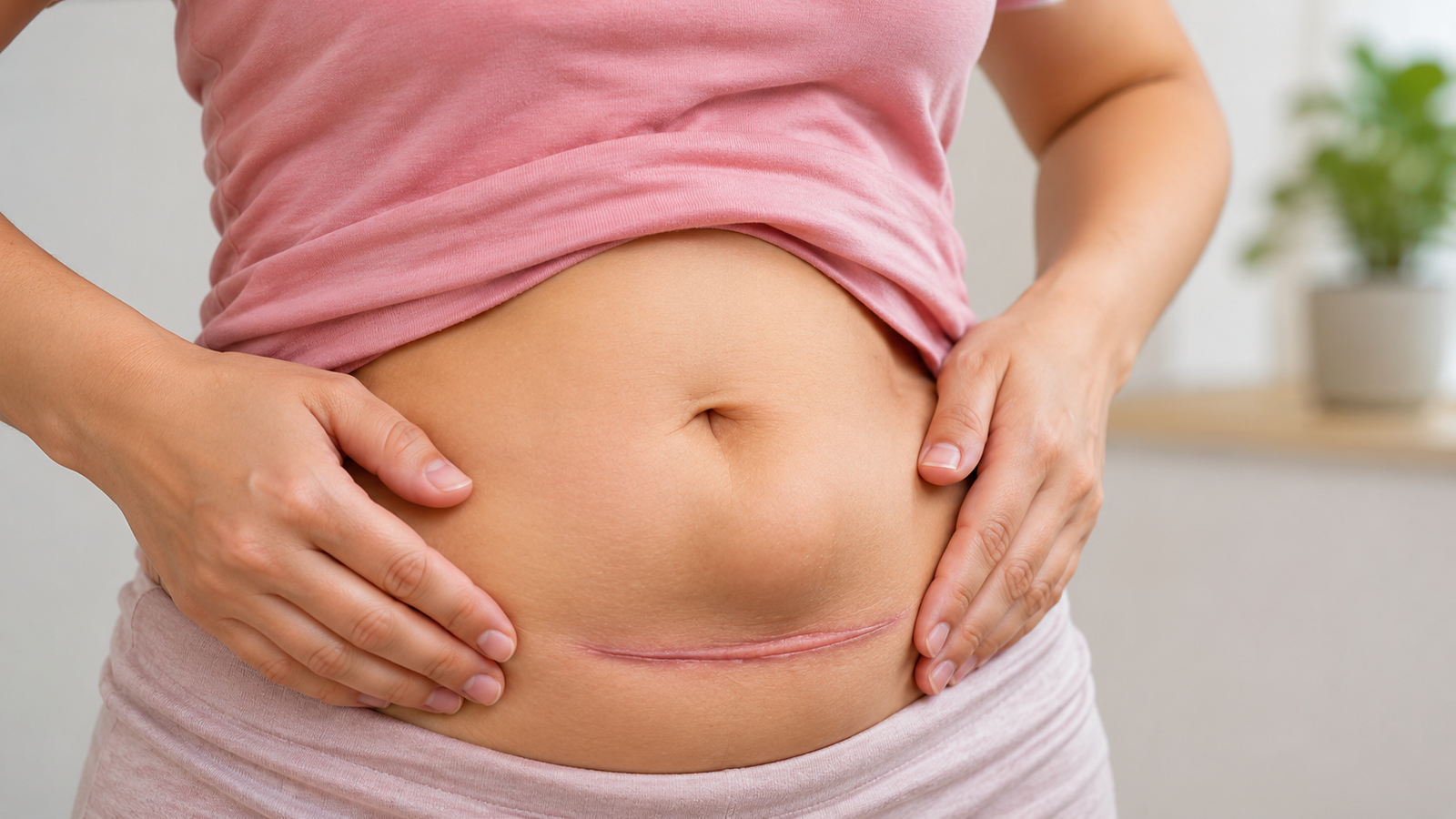
A hernia after a C-section is an incisional hernia that develops when tissue pushes through a weakened area of the abdominal wall near the surgical scar. It may appear months or years after delivery. Dr. Vikram Lotwala can assess the bulge through examination and imaging and discuss repair when necessary.
If you are concerned about a hernia after c section in surat, understanding the symptoms and treatment options can help you seek timely medical care.
Not every swelling near a C-section scar is a hernia. Some women develop scar tissue, abdominal muscle separation or other conditions that produce a similar appearance.
A proper medical examination helps distinguish these problems and determine whether surgery is required.
Dr. Vikram Lotwala, associated with Wings Hospital, Adajan, evaluates abdominal wall hernias and discusses suitable management based on symptoms, examination findings and individual health needs.
Why Hernias Form After a C-Section
A caesarean section involves an incision through the abdominal wall to deliver a baby.
During recovery, the tissues gradually heal. However, if the deeper supporting layers do not regain sufficient strength, an opening or weakness may develop.
Abdominal tissue or fat, and sometimes intestine, can push through this weakened area, creating an incisional hernia.
What Causes an Incisional Hernia?
An incisional hernia after cesarean delivery may be associated with several factors:
-
Previous abdominal surgery.
-
Surgical wound infection or impaired healing.
-
Obesity or increased abdominal pressure.
-
Diabetes that is not adequately controlled.
-
Smoking or tobacco use.
-
Repeated abdominal operations.
-
Conditions affecting connective tissue strength.
These factors may increase risk, but they do not mean every patient will develop a hernia.
Can a Hernia Develop Years After Delivery?
Yes.
An incisional hernia may become noticeable long after the original operation.
Some patients first observe a small swelling while standing, coughing or lifting.
Others notice a gradually enlarging bulge near the previous scar.
Because symptoms can develop slowly, patients may initially mistake the swelling for normal changes after pregnancy.
Is a C-Section Hernia Common?
Incisional hernias can occur after abdominal surgery, although they are less common after a typical low transverse C-section incision than after many other abdominal incisions.
The possibility of a hernia depends on several factors, including incision type, wound healing and individual medical history.
Signs: Bulge, Pain, Change on Coughing
The most recognisable symptom is a swelling or bulge near c section scar.
However, the appearance and severity vary.
Common Signs of a C-Section Hernia
Patients may notice:
-
A soft or firm bulge near the surgical scar.
-
Swelling that becomes more prominent when standing.
-
A bulge that increases during coughing or straining.
-
Discomfort during lifting or physical activity.
-
A pulling sensation around the previous incision.
-
Swelling that becomes smaller when lying down.
Some hernias cause little or no pain.
Others produce discomfort that affects everyday activities.
Why Does the Bulge Change When Coughing?
Coughing temporarily increases pressure inside the abdomen.
If there is a weakness in the abdominal wall, this pressure may push tissue through the opening, making the swelling more visible.
However, this sign alone cannot confirm a hernia.
When Is a Hernia Dangerous?
A hernia may become dangerous if its contents become trapped or lose their blood supply.
Warning symptoms include sudden severe pain, a tender bulge that cannot be pushed back, vomiting or abdominal swelling.
These symptoms require immediate emergency assessment.
Do not attempt to force a painful, irreducible bulge back into the abdomen.
Symptoms That Need Medical Assessment
| Symptom | Recommended Action |
|---|---|
| New bulge near the C-section scar | Arrange a medical examination within the week |
| Bulge that becomes prominent when coughing | Schedule a surgical consultation |
| Persistent discomfort around the scar | Seek medical assessment |
| Bulge increasing in size | Arrange a prompt surgical review |
| Swelling affecting daily activities | Discuss treatment options |
| Sudden severe pain with vomiting or an irreducible painful bulge | Seek emergency medical care immediately |
The checklist is general guidance. Rapidly worsening symptoms should be assessed sooner.
Diastasis Recti or Hernia?
After pregnancy, some women develop a separation of the rectus abdominal muscles.
This condition is called diastasis recti.
Although diastasis recti can create a visible abdominal bulge, it is different from an incisional hernia.
What Is Diastasis Recti?
Diastasis recti occurs when the connective tissue between the abdominal muscles becomes stretched and widened.
It may produce a ridge or bulge along the middle of the abdomen, particularly when the muscles are contracted.
Unlike a true hernia, diastasis recti does not necessarily involve a hole in the abdominal wall fascia.
Key Differences
| Feature | Incisional Hernia | Diastasis Recti |
|---|---|---|
| Main problem | Defect in the abdominal wall | Widening between abdominal muscles |
| Typical appearance | Localised bulge near an incision | Broader midline bulging |
| Changes with straining | Often becomes more prominent | May form a visible ridge |
| Risk of bowel trapping | Possible | Not caused by diastasis alone |
| Treatment | Observation or surgical repair | Rehabilitation, sometimes surgery |
How Does the Doctor Confirm the Diagnosis?
A surgeon examines the abdomen while the patient is standing and lying down.
The examination may include gentle coughing or abdominal muscle contraction.
Ultrasound can help identify an abdominal wall defect.
CT imaging may be considered when the diagnosis is uncertain or detailed surgical planning is necessary.
Correct diagnosis is important because treatment differs between these conditions.
Repair Options and Timing
Not every incisional hernia requires immediate surgery.
Treatment depends on the size of the defect, symptoms, risk of complications and the patient's overall health.
1. Observation and Follow-Up
For a small, reducible hernia causing minimal symptoms, a surgeon may recommend monitoring after discussing the risks.
Observation does not close the defect.
Patients should report increasing pain, enlargement or new symptoms.
2. Open Hernia Repair
During open repair, the surgeon makes an incision to access the hernia.
The contents are returned to their appropriate position, and the abdominal wall defect is repaired.
Mesh reinforcement may be recommended depending on the circumstances.
3. Laparoscopic Hernia Repair
Laparoscopic surgery uses small incisions and specialised instruments to repair selected abdominal wall hernias.
It may be suitable for some patients, but not every hernia is appropriate for this approach.
The choice depends on defect size, previous surgery, abdominal adhesions and other clinical factors.
4. Robotic Hernia Repair
Robotic-assisted repair is another minimally invasive option in selected cases where the equipment and surgical expertise are available.
It is not automatically superior for every patient.
Is Mesh Necessary?
Mesh is frequently used for incisional hernia repair because it can reduce recurrence compared with suture-only repair in appropriate patients.
However, mesh selection and placement must be individualised.
The surgeon considers infection risk, hernia characteristics and future pregnancy plans.
Patients can explore hernia treatment in Surat and ventral hernia surgery for additional information.
When Should Repair Be Planned?
Elective repair is generally considered after appropriate recovery from childbirth and when the patient's health is optimised.
The timing depends on symptoms, defect characteristics, breastfeeding considerations and plans for another pregnancy.
Planning Another Pregnancy After Hernia Repair
Future pregnancy is an important consideration when discussing hernia repair after delivery.
Pregnancy stretches the abdominal wall and increases pressure inside the abdomen.
This may affect a previously repaired area and can increase the risk of hernia recurrence.
Can You Become Pregnant After Repair?
Yes, pregnancy is possible after hernia repair.
However, patients planning another child should discuss this with their surgeon before elective surgery.
The best approach depends on the severity of the hernia and whether postponing repair is medically appropriate.
Should Surgery Wait Until After Another Pregnancy?
For some women with a small, minimally symptomatic hernia, postponing elective repair until after completing planned pregnancies may be reasonable.
However, a painful, enlarging or complicated hernia may require earlier treatment.
The decision should be made individually.
Questions to Ask Before Surgery
Discuss the following with your surgeon:
-
Is the hernia safe to monitor temporarily?
-
What is the risk of enlargement during pregnancy?
-
Is mesh reinforcement appropriate?
-
Could pregnancy increase the chance of recurrence?
-
What activity restrictions will apply after repair?
-
When can normal exercise and childcare activities resume?
Hernia After Delivery Treatment in Bhatar Surat: When to Consult
Patients searching for hernia after delivery treatment in bhatar surat should arrange a surgical evaluation when they notice a persistent or enlarging bulge near a previous C-section incision.
Dr. Vikram Lotwala, associated with Wings Hospital, Adajan, can review the patient's symptoms, surgical history and imaging results to discuss suitable management.
What to Bring to the Consultation
Bring previous C-section records if available, ultrasound reports, a list of current medicines and details of any previous abdominal operations.
It is also helpful to mention whether another pregnancy is planned.
For a general example of hernia treatment experiences, see this ventral hernia patient story.
Individual outcomes may differ.
Conclusion
A hernia after c section in surat may appear as a bulge near the surgical scar months or years after childbirth.
While some hernias can be monitored, others require surgical repair because of pain, enlargement or complications.
An examination and appropriate imaging help distinguish an incisional hernia from diastasis recti and other causes of swelling.
Dr. Vikram Lotwala, associated with Wings Hospital, Adajan, can discuss observation, repair options and future pregnancy considerations.
Frequently Asked Questions
Is a bulge near my C-section scar a hernia?
A bulge near a C-section scar may indicate an incisional hernia, especially if it becomes more visible when coughing or standing. However, scar tissue, diastasis recti and other conditions can look similar. A surgeon can examine the area and recommend ultrasound when needed to confirm the diagnosis.
Can I wait to repair it?
Some small, reducible incisional hernias with minimal symptoms can be monitored after a surgical assessment. However, hernias do not usually close on their own. Patients seeking hernia after delivery treatment in bhatar surat should discuss the risks of waiting, especially if the bulge enlarges or becomes painful.
Can I get pregnant after hernia repair?
Yes, pregnancy is possible after hernia repair. However, pregnancy stretches the abdominal wall and may increase the risk of recurrence. If you are planning another child, discuss the timing of surgery with your surgeon. The recommendation depends on symptoms, hernia size and individual circumstances.
Is mesh safe after a C-section hernia?
Mesh is commonly used in incisional hernia repair and can reduce recurrence in appropriately selected patients. However, risks include infection, discomfort and other mesh-related complications. The decision depends on the hernia, medical history and future pregnancy plans. Your surgeon should explain the benefits and risks before surgery.
Consult Dr. Vikram Lotwala
Advanced bariatric, hernia and laparoscopic surgical care in Surat.