
Hernia Belt vs Surgery: Does a Hernia Belt Help? (Surat Patient Guide)
Dr. Vikram Lotwala
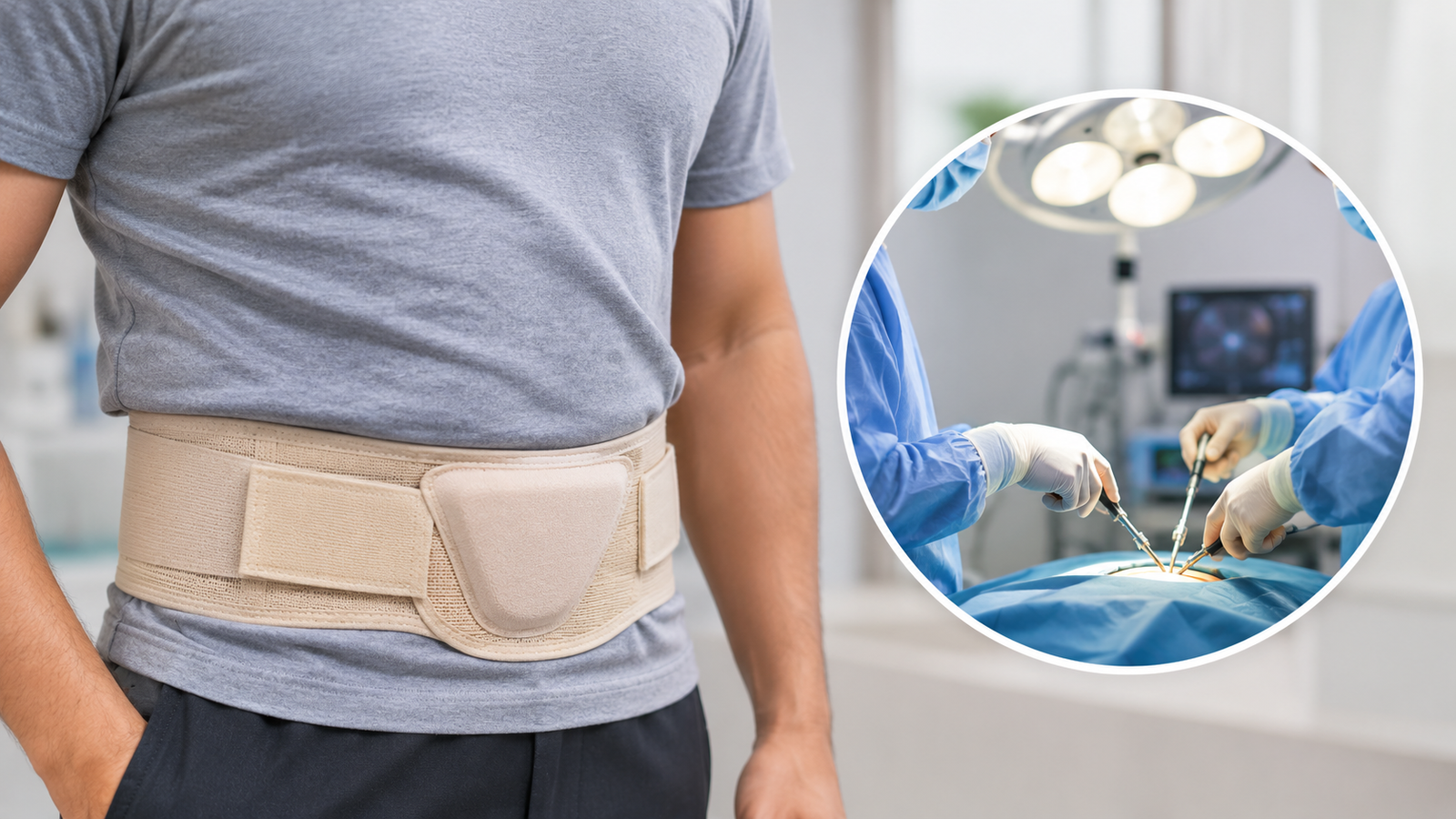
A hernia belt may temporarily support a reducible hernia and ease discomfort, but it cannot close the abdominal wall defect or prevent the hernia from growing. Some patients use a belt while awaiting surgery or when an operation is unsuitable. A surgeon should assess the hernia before recommending one.
If you are wondering does a hernia belt help in surat, the answer depends on the type of hernia, its symptoms and your overall health.
A hernia belt, sometimes called a truss, is not a replacement for surgical repair. Although it may provide temporary support, relying on it without medical assessment can delay necessary treatment.
Dr. Vikram Lotwala, associated with Wings Hospital, Adajan, evaluates hernias and helps patients understand when temporary support, observation or surgery may be appropriate.
What a Hernia Belt Does and Does Not Do
A hernia develops when tissue pushes through a weak area or opening in the abdominal wall.
The resulting bulge may become more noticeable when standing, coughing, or lifting.
A hernia belt applies external pressure over the affected area to help support a reducible bulge.
How Does a Hernia Belt Work?
A truss for inguinal hernia typically includes an adjustable strap and a supportive pad.
When correctly fitted, the pad may help keep a reducible hernia supported during certain activities.
However, a belt does not strengthen or repair the underlying muscle or fascial defect.
What Can a Belt Help With?
In selected patients, a belt may:
-
Temporarily support a reducible hernia.
-
Reduce discomfort during routine activities.
-
Provide short-term support while awaiting surgery.
-
Help selected patients who cannot undergo surgery.
These potential benefits vary, and evidence for long-term symptom improvement is limited.
What Can a Belt Not Do?
A hernia belt cannot:
-
Permanently close the hernia opening.
-
Repair weakened abdominal tissue.
-
Reliably prevent hernia enlargement.
-
Eliminate the risk of incarceration or strangulation.
-
Replace necessary surgical treatment.
Therefore, patients should understand the limitations before purchasing or wearing a belt.
Who Can Use a Belt for a While
Not every hernia is suitable for external support.
A surgeon should first confirm the diagnosis and determine whether the hernia is reducible.
Patients Waiting for Surgery
Some patients may use a belt temporarily while preparing for elective hernia repair.
However, this should be based on individual medical advice rather than self-treatment.
Patients Who Cannot Undergo Surgery
People with significant medical conditions may not be suitable candidates for immediate surgery.
In selected cases, a surgeon may recommend observation and consider temporary supportive measures.
However, the decision depends on symptoms and the risk of complications.
Patients With Minimal Symptoms
Some minimally symptomatic hernias can be monitored after a medical assessment.
A belt is not automatically necessary during observation.
The patient should understand warning signs and attend follow-up appointments when advised.
For more information, read about hernia treatment without surgery in Surat.
Who Should Avoid Using a Hernia Belt?
A belt should not be used to manage a painful, irreducible or suspected strangulated hernia.
Seek emergency medical care if a hernia becomes suddenly painful, cannot be reduced, or is associated with vomiting or abdominal swelling.
Do not attempt to force the bulge back into place using a tight belt.
Risks of Relying on a Belt
Patients often ask, is hernia belt safe for daily use?
A correctly selected and fitted belt may be tolerated by some patients, but it is not risk-free.
Skin Irritation and Pressure
A tight belt can cause:
-
Redness.
-
Skin irritation.
-
Pressure discomfort.
-
Chafing.
-
Skin injury with prolonged or excessive pressure.
Patients with fragile skin or reduced sensation require particular caution.
False Sense of Security
A belt may make the bulge less noticeable without changing the underlying defect.
As a result, some patients may delay medical review even when symptoms are worsening.
Incorrect Fit
An unsuitable belt can cause discomfort and may fail to support the hernia.
Different hernia locations require different approaches, so a generic belt may not be appropriate.
Can a Belt Prevent Emergency Surgery?
No.
There is no reliable evidence that a hernia belt prevents all complications.
Patients should recognise warning signs and seek urgent treatment when necessary.
Read about emergency hernia surgery to understand situations requiring immediate attention.
Why Surgery Is the Lasting Fix
The main difference in hernia belt vs surgery is that a belt provides external support, while surgery repairs the abdominal wall defect.
Hernia surgery aims to return protruding tissue to its normal position and close or reinforce the opening.
Open Hernia Repair
During open repair, the surgeon makes an incision over the affected area and repairs the hernia.
Mesh reinforcement may be used depending on the hernia type and clinical circumstances.
Laparoscopic Hernia Repair
Laparoscopic repair uses small incisions and specialised instruments.
It can be appropriate for selected patients, although the choice depends on the hernia's size, location, previous operations and overall health.
Patients can explore laparoscopic hernia repair for further information.
Hernia Belt vs Surgery: Comparison Table
| Feature | Hernia Belt | Hernia Surgery |
|---|---|---|
| Main purpose | Temporary external support | Repair of the abdominal wall defect |
| Closes the hernia opening | No | Yes, repair is intended to close or reinforce it |
| Permanent treatment | No | Usually the definitive treatment |
| Symptom relief | May provide temporary relief | May relieve hernia-related symptoms |
| Prevents recurrence | Does not repair the defect | Recurrence remains possible |
| Main risks | Pressure injury, discomfort, delayed treatment | Anaesthesia, infection, pain and recurrence |
| Best suited for | Selected patients under medical advice | Patients for whom operative repair is appropriate |
Does Surgery Guarantee a Permanent Cure?
Surgery is the standard definitive treatment for many abdominal wall hernias, but recurrence remains possible.
The risk depends on factors such as hernia type, tissue quality, smoking, obesity and the repair technique.
Choosing the Right Time for Repair
The decision to operate depends on more than the size of the bulge.
A surgeon considers symptoms, hernia type, reducibility, progression and the patient's medical fitness.
When Can Surgery Be Planned Electively?
Elective repair may be considered when the hernia causes pain, limits activities or increases in size.
Some minimally symptomatic hernias can be monitored after discussing the risks and benefits.
When Should Surgery Not Be Delayed?
Urgent assessment is needed when symptoms suggest incarceration, bowel obstruction or strangulation.
Warning signs include:
-
Sudden severe pain.
-
A tender bulge that cannot be reduced.
-
Persistent vomiting.
-
Abdominal swelling.
-
Skin discolouration over the bulge.
These symptoms require emergency care rather than belt adjustment.
Questions to Ask Before Repair
Discuss the following with your surgeon:
-
What type of hernia do I have?
-
Is observation safe in my situation?
-
Would a belt provide useful temporary support?
-
Is open or laparoscopic repair more suitable?
-
What are the risks of delaying surgery?
-
What postoperative restrictions will apply?
Hernia Belt Advice in Althan Surat: When to Consult
Patients searching for hernia belt advice in althan surat should consult a qualified surgeon before using a truss or abdominal support belt.
Dr. Vikram R. Lotwala, associated with Wings Hospital, Adajan, can assess the hernia and explain whether observation, temporary support or surgical repair is appropriate.
A consultation may include examination of the bulge and imaging when needed.
Patients should bring previous ultrasound reports, current medicines and details of earlier abdominal operations.
Conclusion
If you are asking does a hernia belt help in surat, remember that a belt may provide temporary support but cannot repair the underlying hernia.
For selected patients, observation or short-term belt use may be reasonable under medical supervision.
However, symptomatic or complicated hernias may require surgical treatment.
Dr. Vikram Lotwala, associated with Wings Hospital, Adajan, can assess your condition and discuss the appropriate treatment approach.
Frequently Asked Questions
Can a belt cure a hernia?
No. A hernia belt cannot close the muscle or fascial defect that allows tissue to protrude. It may temporarily support a reducible hernia, but the underlying weakness remains. Patients seeking hernia belt advice in althan surat should discuss whether observation or surgical repair is more appropriate.
How many hours a day can I wear it?
There is no universal safe number of hours for wearing a hernia belt. Duration depends on the hernia type, belt fit, symptoms and medical advice. Avoid prolonged pressure without assessment, check the skin regularly and follow your surgeon's specific instructions rather than using a fixed schedule.
Is it safe to wear during sleep?
A hernia belt should not routinely be worn during sleep unless a clinician specifically recommends it. Many patients do not need external support while lying down. Wearing a tight belt overnight may increase pressure or skin irritation. Ask your surgeon whether nighttime use is appropriate for your condition.
Should I wear a belt after surgery?
Do not assume that a hernia belt is necessary after surgery. Some patients may be advised to use an abdominal binder for comfort or support, but this is different from a hernia truss. Follow your surgeon's postoperative instructions regarding support garments, activity restrictions and wound care.
Consult Dr. Vikram Lotwala
Advanced bariatric, hernia and laparoscopic surgical care in Surat.